
Pressed Parts: How They Are Made, Where They Excel, and What to Specify
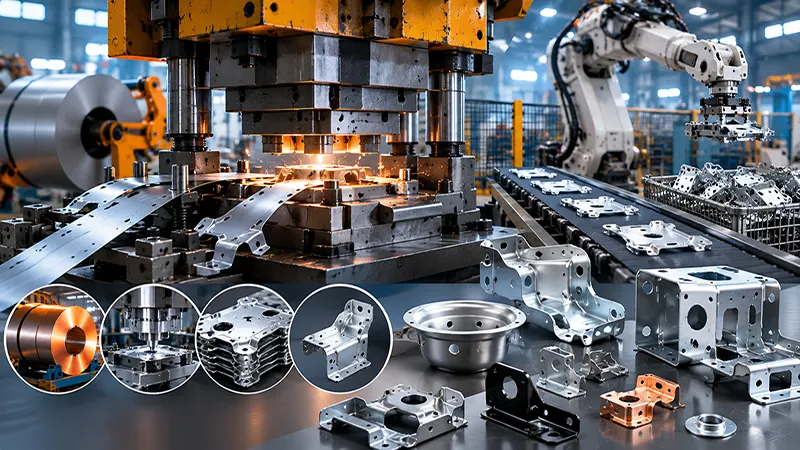
Pressed parts are everywhere in modern engineering, from automotive body structures and brackets to enclosures, appliance components, and electrical contacts. Made by forming sheet or coil metal under a press rather than cutting it from solid stock, pressed parts offer a combination of strength, repeatability, and low per-unit cost that few other processes match at volume. For engineers, designers, and procurement specialists, understanding how these components are produced, where they make sense, and what to specify is the key to getting reliable parts without unnecessary cost or delay.
This guide explains what pressed parts are, the main processes behind them, the material and design factors that determine success, and the practical guidance that helps technically minded readers make sound decisions. The approach is neutral and educational rather than a pitch for any single method or provider.
What Pressed Parts Are and How They Are Produced
A pressed part is formed … Continue reading >>>


Most Reliable Used Cars Under $20,000 with Apple CarPlay in 2026
In 2026, the used car market has finally found its footing after years of volatility. For buyers with a $20,000 budget, the priority has shifted from just finding “any” car to finding one that balances modern connectivity with long-term mechanical survival. Apple CarPlay is no longer a luxury—it is a safety and convenience essential for the digital nomad and daily commuter alike.
Fortunately, the “sweet spot” for this budget currently lands on vehicles manufactured between 2019 and 2022. These cars have depreciated enough to fit the sub-$20k bracket while still offering the safety tech and smartphone integration that defined the early 2020s.
The Reliability Champions: Compact Sedans
If your goal is to minimize repair bills, the compact sedan segment remains the gold standard. In 2026, these three models dominate the “best value” lists.
1. 2021 Toyota Corolla
The 2021 Corolla is the poster child for reliable used cars. … Continue reading >>>
Software-Defined Vehicle Architecture Benefits for 2026 Luxury Models
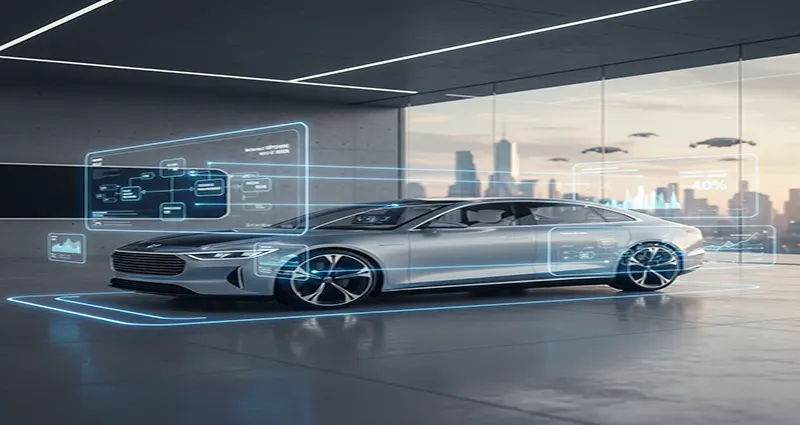
In 2026, the definition of a “luxury car” has moved beyond the quality of the leather stitching or the smoothness of the V12 engine. Today, luxury is defined by agility—the ability of a vehicle to learn, adapt, and improve long after it has left the showroom. This shift is powered by Software-Defined Vehicle (SDV) architecture, a fundamental re-engineering of the car’s “nervous system” that treats hardware as a vessel and software as the soul.
For the 2026 luxury buyer, the benefits of SDV architecture manifest in four key areas: evergreen functionality, hyper-personalization, advanced safety, and simplified physical complexity.
1. The “Evergreen” Vehicle: Ending Rolling Obsolescence
Traditionally, a car was at its peak performance the day you bought it; from that moment on, it began the slow slide into obsolescence. SDV architecture in 2026 luxury models like the BMW iX3 (Neue Klasse) or the Lucid Gravity turns this model … Continue reading >>>

New Level 3 Autonomous Driving Regulations for European Highways in 2026
The year 2026 marks a watershed moment for European transportation. After years of small-scale pilots and cautious “hands-on” systems, the legislative floodgates have opened. As of January 1, 2026, new amendments to the UN Regulation No. 157 and harmonized EU road traffic laws have officially moved Level 3 autonomous driving from a novelty into a regulated reality on European highways.
For drivers, this means the car is no longer just assisting; it is, under specific conditions, the legal driver. Here is an in-depth look at the regulations governing Level 3 autonomy across the EU in 2026.
1. The 130 km/h Milestone: Speed and Scope
The most significant change in 2026 is the expansion of the Operational Design Domain (ODD). Previously, Level 3 systems were largely restricted to “Traffic Jam Pilots” operating at speeds below 60 km/h.
New Limits:
- Speed: The UN-R157 update now permits Automated Lane Keeping Systems (ALKS)
Impact of 2026 Solid-State Battery Production on EV Range Limits
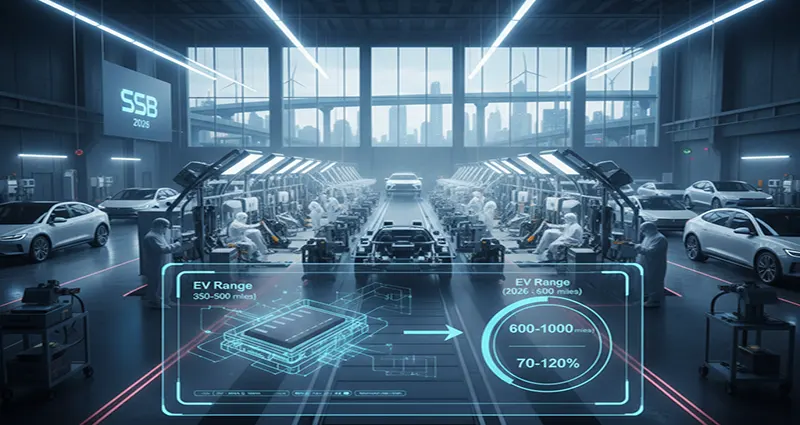
For over a decade, the “solid-state battery” has been the elusive holy grail of the automotive world. In 2026, the narrative has shifted from laboratory speculation to factory floor reality. With the first commercial production lines now operational and high-profile debuts at CES 2026, the industry is witnessing a fundamental recalibration of what an electric vehicle (EV) can achieve.
The transition from liquid electrolytes to solid-state chemistry isn’t just an incremental upgrade; it is a “regime change” for energy density. By replacing flammable liquids with solid ceramic or polymer separators, manufacturers are finally breaking the range barriers that have constrained the first generation of EVs.
The 600-Mile Threshold: A New Industry Standard
In the era of lithium-ion, a 300-mile range was considered the “sweet spot” for premium EVs, while 500 miles was a rare and expensive outlier. In 2026, solid-state production has pushed the ceiling to 600–750 miles (1,000–1,200 km)… Continue reading >>>