Pressed Parts: How They Are Made, Where They Excel, and What to Specify

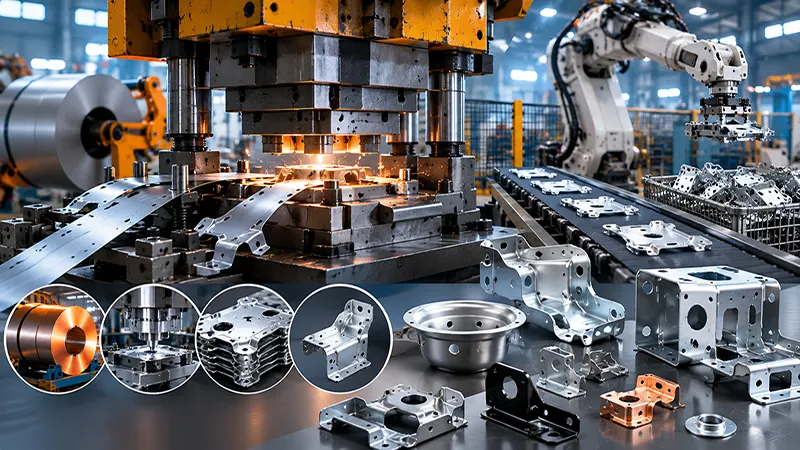
Pressed parts are everywhere in modern engineering, from automotive body structures and brackets to enclosures, appliance components, and electrical contacts. Made by forming sheet or coil metal under a press rather than cutting it from solid stock, pressed parts offer a combination of strength, repeatability, and low per-unit cost that few other processes match at volume. For engineers, designers, and procurement specialists, understanding how these components are produced, where they make sense, and what to specify is the key to getting reliable parts without unnecessary cost or delay.

This guide explains what pressed parts are, the main processes behind them, the material and design factors that determine success, and the practical guidance that helps technically minded readers make sound decisions. The approach is neutral and educational rather than a pitch for any single method or provider.

What Pressed Parts Are and How They Are Produced

A pressed part is formed … Continue reading >>>

German Automotive Industry Strategy Against Chinese EV Market Competition

The decades-long dominance of German engineering, synonymous with automotive quality and innovation, is facing an unprecedented strategic challenge. Aggressive, high-tech, and low-cost Chinese EV entrants, such as BYD and Nio, are rapidly gaining market share not only in their home territory but also increasingly in Europe. The core of this threat lies in their command of electric vehicle technology and their efficient manufacturing pipelines. This article will dissect the core strategies German Original Equipment Manufacturers (OEMs)—including BMW, Mercedes-Benz, and the Volkswagen Group—are deploying to defend their market share and regain a decisive competitive edge in the electric era.


The Threat Assessment: Speed and Cost

The nature of the Chinese competitive advantage is two-fold: speed of development cycles and cost efficiency. Chinese EV players have mastered vertical integration, controlling everything from battery cell production and software development to final assembly. This control allows them to iterate rapidly and … Continue reading >>>

The High Cost of Red Tape: Impact of Brexit on UK Car Manufacturing and Rules of Origin Tariffs

The UK automotive sector, a cornerstone of the national economy, relies heavily on frictionless trade with the European Union, which remains its single largest export market. The end of the Brexit transition period in 2021 introduced the UK-EU Trade and Cooperation Agreement (TCA), a deal that, while avoiding an immediate collapse into World Trade Organization (WTO) tariffs, created substantial trade friction. This article details how the TCA, particularly its complex Rules of Origin (ROO) provisions, has raised costs, increased administrative burdens, and now poses an existential threat to the long-term viability of UK car production.


The Pre-Brexit Model: Just-in-Time & Deep Integration

Prior to 2021, the UK’s relationship with the EU Single Market was characterized by deep component integration. Automotive supply chains spanned the continent, with parts—often sourced multiple times—crossing borders tariff-free and without complex customs checks. This system allowed UK manufacturing plants to operate a highly efficient Just-in-Time Continue reading >>>

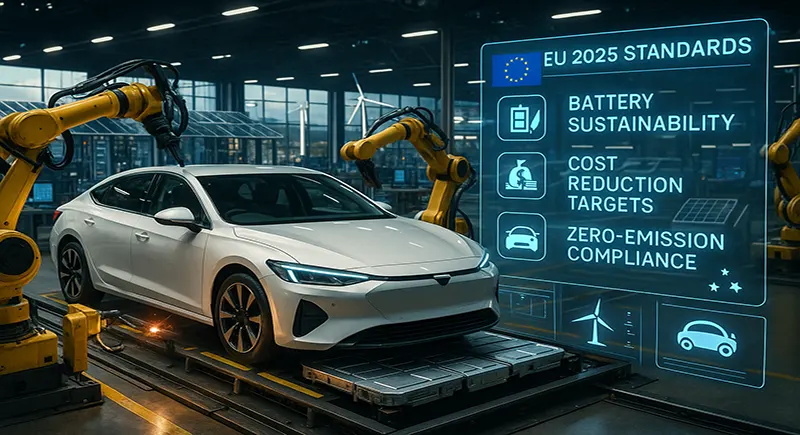
Latest EU Regulations on Affordable Electric Vehicle Production by 2025

The European Union’s ambitious climate goals—to achieve carbon neutrality by 2050—rest heavily on the mass adoption of electric vehicles (EVs). However, widespread uptake is currently hampered by the barrier of high initial purchase costs for many consumers. In response, the EU has employed a two-pronged strategy: punitive emissions targets to force manufacturers to produce more EVs, and systemic regulations to drive down long-term production costs. This article details the critical EU legislative actions aimed at boosting affordability by 2025 and examines the policy challenges in meeting these goals.


The Legislative Context: CO2 Targets and the ICE Phase-Out

The overarching legislative framework is the commitment to phase out new sales of internal combustion engine (ICE) vehicles by 2035. This hard deadline creates existential pressure on automakers. More immediately, the EU imposes stringent CO2 emission reduction targets for automakers’ average fleet sales.

The next major reduction stage is 2025, which … Continue reading >>>

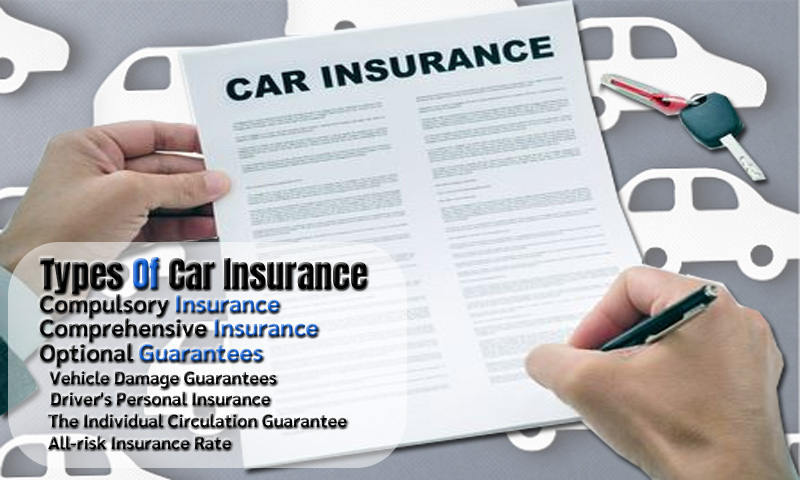
What Are The Different Types Of Car Insurance Available In 2021?

When looking for suitable car insurance the first question arises of the type of insurance. A new car also always offers you the possibility of opting for new car insurance and thus, if necessary, to save money. Moreover, it is only possible to change insurance at the end of the year. It depends above all on the guarantees that you wish to take out in addition to the insurance compulsory, there are also various optional insurances under Collected.Reviews.

Here are some of the best car insurance available in 2021.

Compulsory Insurance (called Third Party Insurance)

The compulsory insurance called “third-party” consists of the cover of your liability and that of anyone driving or parking your vehicle. This means that the insurance covers damage that you or others may cause with your vehicle to other people (third parties) as well as to their vehicle or any other property.

Comprehensive Insurance

Continue reading >>>