
Digital Nomad Van Life: Best Fuel-Efficient Vans for Remote Work

For the modern digital nomad, the dream is simple: a sunrise over a different horizon every morning, a high-speed Starlink connection, and a workspace that never feels like a cubicle. However, the reality of 2026 brings a pragmatic challenge: the “fuel tax” on freedom. As fuel prices fluctuate and environmental zones expand across Europe and North America, the choice of a van is no longer just about aesthetics—it’s about miles per gallon (MPG) and carbon footprints.

In this guide, we break down the best fuel-efficient vans for remote work, categorised by size and lifestyle needs, to ensure your mobile office doesn’t cost more to move than your monthly rent.

The Efficiency Landscape of 2026

When building a mobile office, you are balancing three competing needs: space (for ergonomics), power (for your gear), and efficiency (for your budget). In 2026, the market has split into three distinct “tiers” of fuel … Continue reading >>>

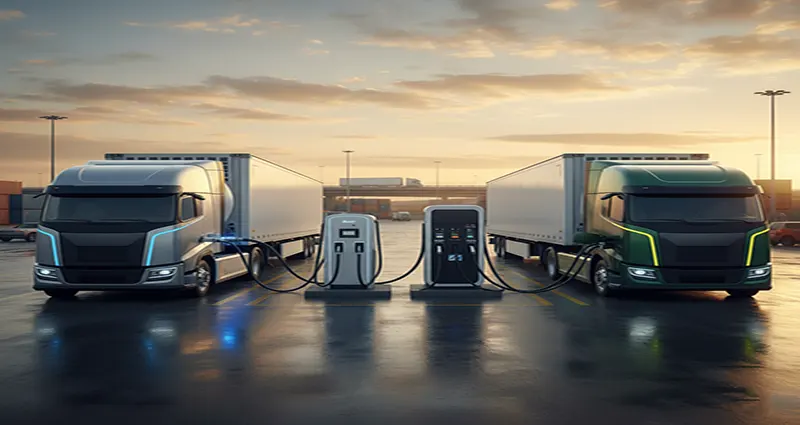
Hydrogen Fuel Cell vs Battery Electric Trucks for Long-Haul Logistics

As the transportation sector races toward net-zero emissions, the “Heavy Duty” segment remains the most difficult to decarbonize. For decades, diesel was the undisputed king of the highway. However, in 2026, a fierce technological rivalry has emerged. On one side, we have Battery Electric Trucks (BETs), which dominate regional routes; on the other, Hydrogen Fuel Cell Electric Vehicles (FCEVs), which are being hailed as the savior of long-haul logistics.

For fleet managers and supply chain executives, the choice isn’t just about “going green”—it’s about payload, uptime, and the total cost of ownership (TCO).

The Core Technology: How They Differ

Both vehicles are technically electric. They use electric motors to turn the wheels. The difference lies in how they store and generate that electricity.

  • Battery Electric (BET): Operates like a giant smartphone. It stores energy in massive lithium-ion or LFP (Lithium Iron Phosphate) battery packs. To “refuel,” you must
Continue reading >>>
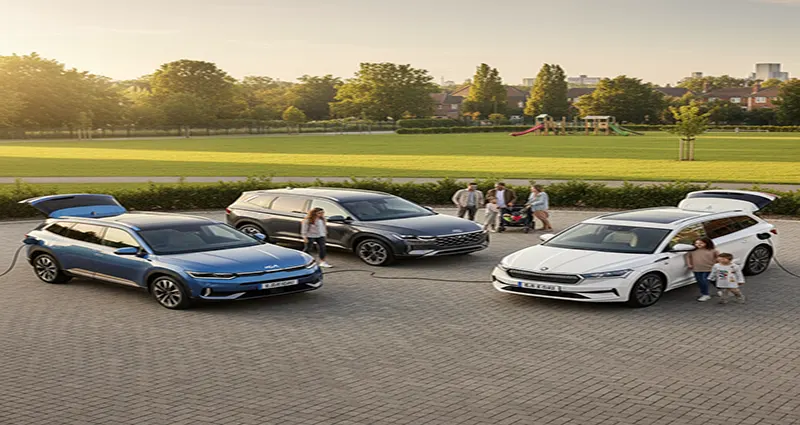
Best 7-seater electric SUVs for families under £60k

Finding a spacious, all-electric vehicle that doesn’t break the bank has historically been a challenge for large families. However, as we move through 2026, the market has finally caught up with demand. While luxury flagships like the Volvo EX90 or the Kia EV9 often grab the headlines with prices soaring past £75,000, there is a new “sweet spot” in the market.

For families with a budget capped at £60,000, the options are more diverse and capable than ever before. From retro-styled MPVs to tech-heavy compact SUVs, here are the best 7-seater electric SUVs for families under £60k.

1. Hyundai Ioniq 9 (Standard Range)

Starting Price: ~£57,575

Best For: Sumptuous comfort and ultra-fast charging.

The newly released Hyundai Ioniq 9 is the cousin to the award-winning Kia EV9 but carries a slightly more approachable entry price for the standard-range model. Built on the E-GMP platform, it features an 800V architecture … Continue reading >>>

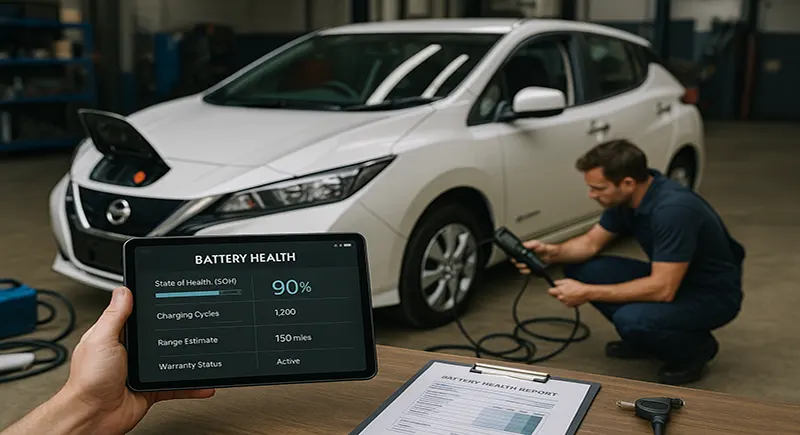
Used Nissan Leaf Battery Health Check Before Purchasing (A Buyer’s Guide)

The Nissan Leaf remains one of the most popular and affordable choices for drivers seeking an entry point into electric vehicle ownership. However, for early models (primarily those produced between 2011 and 2017), a critical caveat exists: its battery design, which lacks active thermal management, makes degradation a significant concern. To secure a successful and useful purchase, buyers must move past simple mileage and focus intently on battery health. This guide will empower buyers with the essential knowledge and step-by-step methodology to accurately check the battery and avoid purchasing a car with severely degraded range.


Understanding the Degradation Challenge

The biggest technical limitation of the early Leaf (which includes both 24 kWh and 30 kWh battery packs) is that it relies on passive cooling—meaning it uses ambient air and the vehicle body to dissipate heat, rather than active liquid cooling loops found in many modern EVs.

This … Continue reading >>>

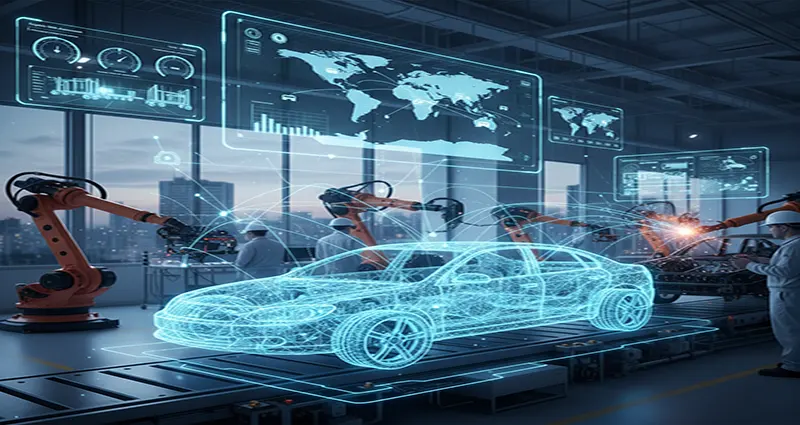
Digital Twin Technology in Automotive Manufacturing for Supply Chain Resilience

In the high-stakes world of automotive manufacturing, a single missing microchip or a delayed shipment of specialized steel can bring multi-billion dollar assembly lines to a grinding halt. As the industry shifts toward electric vehicles (EVs) and autonomous systems, the complexity of the global supply chain has reached a breaking point. Enter Digital Twin technology: the “resilience layer” that allows manufacturers to mirror their physical reality in a virtual world to anticipate, simulate, and survive disruptions.

The Architecture of Resilience: What is a Supply Chain Digital Twin?

A Digital Twin is not a static 3D model; it is a dynamic, living virtual representation of a physical asset, process, or system. In the context of the automotive supply chain, it creates a “digital thread” that connects raw material suppliers, Tier-1 component manufacturers, logistics providers, and the factory floor.

The Three Core Pillars:

  1. The Physical Entity: The actual trucks, warehouses, inventory,
Continue reading >>>