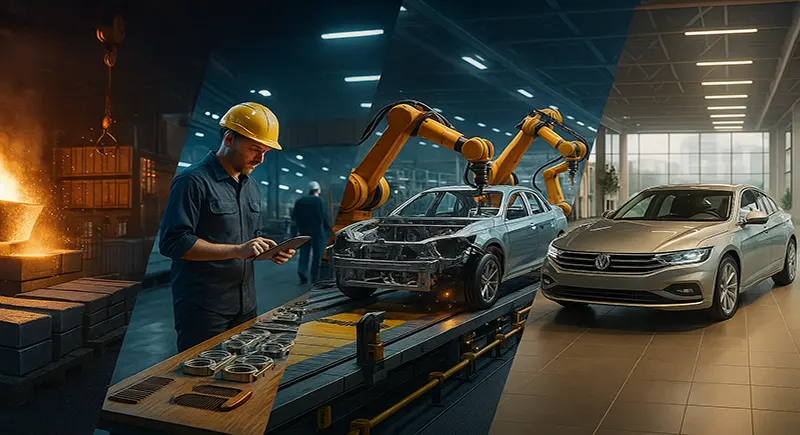
Who Builds Your Car? OEM vs. Tier 1 Supplier Explained Simply for Business Beginners

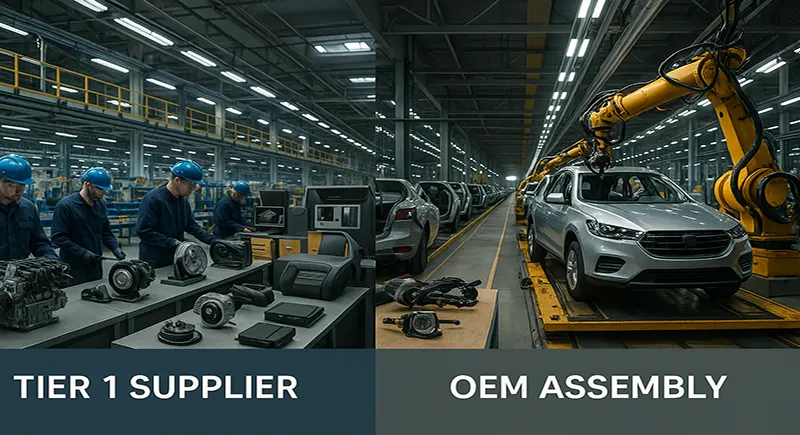
The automotive world is an ecosystem of massive collaboration, and understanding its core players is essential for anyone entering the industry. At the top of the food chain are two critical entities: the OEM and the Tier 1 supplier. This relationship is the backbone of vehicle production, dictating everything from design to delivery.

To simplify this complex dynamic, think of it this way: The car manufacturer is the restaurant chef (the OEM), and the major component provider is the specialized catering company (the Tier 1). The chef designs the menu and plates the final meal; the caterer delivers perfect, pre-cooked courses ready for assembly. Our goal here is to explain simply who does what in the final vehicle assembly.


Defining the OEM (Original Equipment Manufacturer)

The OEM (Original Equipment Manufacturer) is the company whose name and badge appear on the car you buy—the brand (e.g., Ford, Toyota, … Continue reading >>>

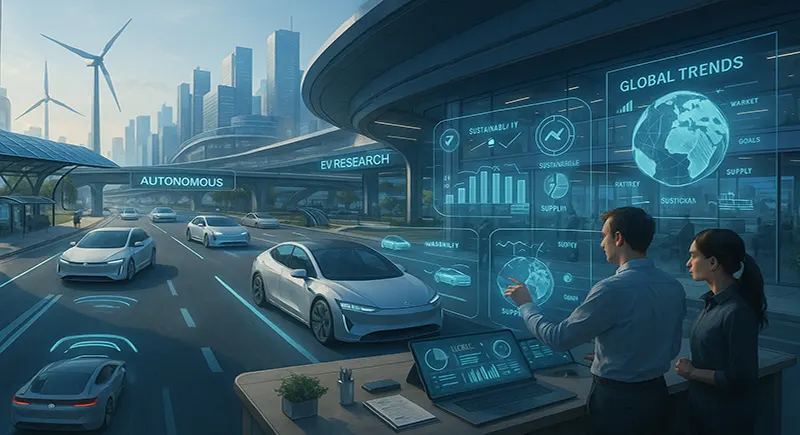
The Road Ahead: Future Trends and Challenges for the Global Car Industry in 2030

The automotive industry is currently undergoing its most profound transformation in a century. Driven by technological innovation, shifting consumer values, and urgent environmental mandates, the traditional model of building and selling cars is fundamentally changing. This article aims to outline the major transformative trends and the critical challenges that will define the competitive landscape of the global car industry by the year 2030. The ability of manufacturers to successfully navigate these shifts will determine their survival and success in the coming decade.


Trend 1: Electrification Dominance

By 2030, the shift to Electric Vehicles (EVs) will move from a niche movement to an industry-defining reality, making electrification the primary powertrain for new vehicles in many key markets. This acceleration is fueled by major battery technology advancements that increase energy density and reduce costs, coupled with aggressive government regulations and generous incentives designed to curb internal combustion engine (ICE) sales. … Continue reading >>>

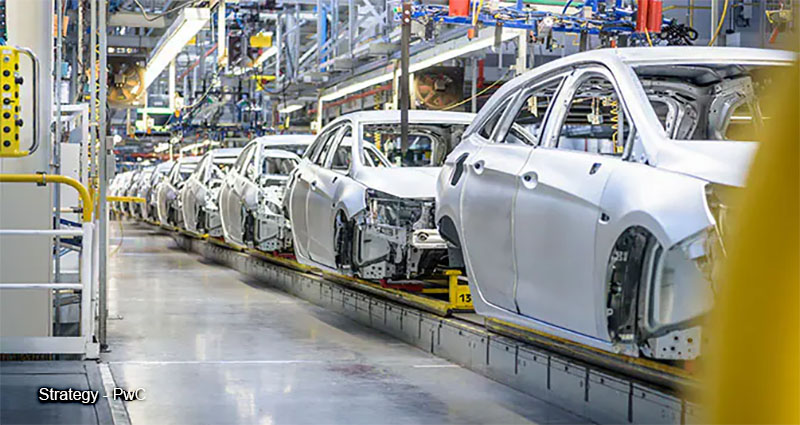
How the Automotive Supply Chain Works: From Raw Materials to the Dealership Floor

The automotive industry relies on one of the most complex logistical networks in the world. A single modern vehicle is composed of tens of thousands of individual components, all of which must arrive at the assembly line in perfect sequence and timing. This intricate journey, known as the automotive supply chain, starts deep in the earth and finishes on the dealership floor. Tracing this process reveals a highly coordinated system, built on layers of dependency, that transforms basic resources into sophisticated machines.


Tier Zero: The Foundation of Raw Materials

The foundation of every car begins with raw materials sourced from around the globe. This Tier Zero level includes vast quantities of steel and aluminum for the body and chassis, plastics and rubber for the interior and tires, and critical minerals like lithium, cobalt, and rare-earth magnets essential for electric vehicle (EV) batteries and electronic components.

These materials … Continue reading >>>

The Global Automotive Industry

The global automotive industry is driven by a number of factors. Increasing demand for fuel-efficient cars and passenger cars, along with government support, are all contributing to the growth of this industry. This is a burgeoning market, with Asia Pacific accounting for the largest share of total sales. The region is also undergoing rapid technological advancement, with engine technology progressing at a fast pace. Government incentives and increased investments are also driving the market in Asia Pacific countries.

Car Sales in India and Brazil Are Expected to Surpass Combined Volumes of Western Europe And Japan by 2020

The cyclical recovery in global auto sales started in mid-2009, and gains have moderated this year to five per cent from 12 per cent in 2010. Purchases in the United States will hit 13.4 million units this year, the highest level since 2007.  Western Europe remains the weak link, with declining sales in … Continue reading >>>

Mobile Technologies Meets the Automotive Industry

Mobile technologies just aren’t isolated to 1 unique sector. While tech-savvy folks do place mobile technology to operate every day, it is not solely them who appreciate the benefits of this critical societal advancement.

More and more industries are studying that the future is mobile. Due to the developing ubiquity of mobile phones, there’s no single industry that could not advantage in some way from implementing mobile technologies. One particular such industry that may (and does) benefit from mobile technology will be the automotive industry. If you’re involved in this competitive sector, then listen up: mobile technologies can help you run your business far more smoothly, and can also let you tackle troubles with more inventive and innovative options.

A single of the most fascinating aspects of mobile technologies would be the advent of QR codes. These codes are becoming more and more commonplace, and are by far the ideal … Continue reading >>>