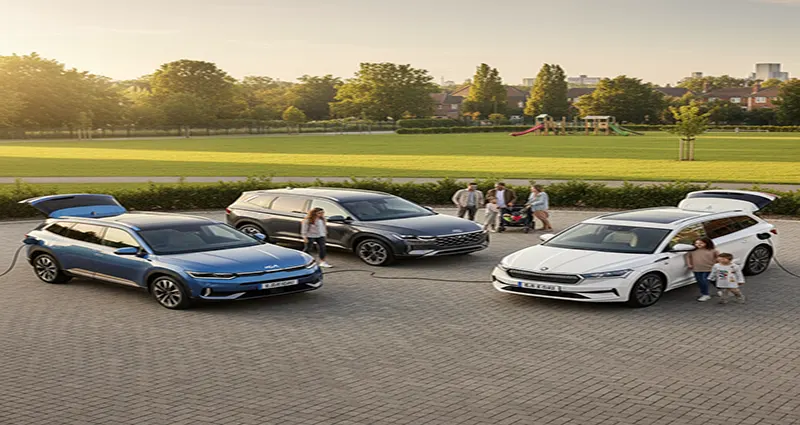

Best 7-seater electric SUVs for families under £60k

Finding a spacious, all-electric vehicle that doesn’t break the bank has historically been a challenge for large families. However, as we move through 2026, the market has finally caught up with demand. While luxury flagships like the Volvo EX90 or the Kia EV9 often grab the headlines with prices soaring past £75,000, there is a new “sweet spot” in the market.

For families with a budget capped at £60,000, the options are more diverse and capable than ever before. From retro-styled MPVs to tech-heavy compact SUVs, here are the best 7-seater electric SUVs for families under £60k.

1. Hyundai Ioniq 9 (Standard Range)

Starting Price: ~£57,575

Best For: Sumptuous comfort and ultra-fast charging.

The newly released Hyundai Ioniq 9 is the cousin to the award-winning Kia EV9 but carries a slightly more approachable entry price for the standard-range model. Built on the E-GMP platform, it features an 800V architecture … Continue reading >>>

German Automotive Industry Strategy Against Chinese EV Market Competition

The decades-long dominance of German engineering, synonymous with automotive quality and innovation, is facing an unprecedented strategic challenge. Aggressive, high-tech, and low-cost Chinese EV entrants, such as BYD and Nio, are rapidly gaining market share not only in their home territory but also increasingly in Europe. The core of this threat lies in their command of electric vehicle technology and their efficient manufacturing pipelines. This article will dissect the core strategies German Original Equipment Manufacturers (OEMs)—including BMW, Mercedes-Benz, and the Volkswagen Group—are deploying to defend their market share and regain a decisive competitive edge in the electric era.


The Threat Assessment: Speed and Cost

The nature of the Chinese competitive advantage is two-fold: speed of development cycles and cost efficiency. Chinese EV players have mastered vertical integration, controlling everything from battery cell production and software development to final assembly. This control allows them to iterate rapidly and … Continue reading >>>

The High Cost of Red Tape: Impact of Brexit on UK Car Manufacturing and Rules of Origin Tariffs

The UK automotive sector, a cornerstone of the national economy, relies heavily on frictionless trade with the European Union, which remains its single largest export market. The end of the Brexit transition period in 2021 introduced the UK-EU Trade and Cooperation Agreement (TCA), a deal that, while avoiding an immediate collapse into World Trade Organization (WTO) tariffs, created substantial trade friction. This article details how the TCA, particularly its complex Rules of Origin (ROO) provisions, has raised costs, increased administrative burdens, and now poses an existential threat to the long-term viability of UK car production.


The Pre-Brexit Model: Just-in-Time & Deep Integration

Prior to 2021, the UK’s relationship with the EU Single Market was characterized by deep component integration. Automotive supply chains spanned the continent, with parts—often sourced multiple times—crossing borders tariff-free and without complex customs checks. This system allowed UK manufacturing plants to operate a highly efficient Just-in-Time Continue reading >>>

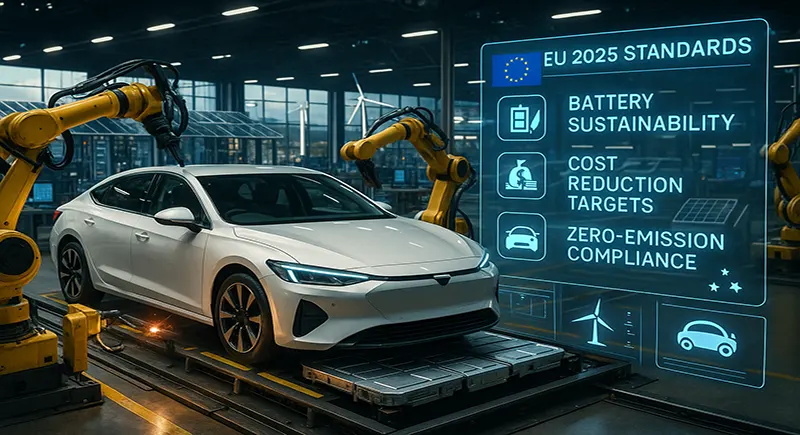
Latest EU Regulations on Affordable Electric Vehicle Production by 2025

The European Union’s ambitious climate goals—to achieve carbon neutrality by 2050—rest heavily on the mass adoption of electric vehicles (EVs). However, widespread uptake is currently hampered by the barrier of high initial purchase costs for many consumers. In response, the EU has employed a two-pronged strategy: punitive emissions targets to force manufacturers to produce more EVs, and systemic regulations to drive down long-term production costs. This article details the critical EU legislative actions aimed at boosting affordability by 2025 and examines the policy challenges in meeting these goals.


The Legislative Context: CO2 Targets and the ICE Phase-Out

The overarching legislative framework is the commitment to phase out new sales of internal combustion engine (ICE) vehicles by 2035. This hard deadline creates existential pressure on automakers. More immediately, the EU imposes stringent CO2 emission reduction targets for automakers’ average fleet sales.

The next major reduction stage is 2025, which … Continue reading >>>

Electric Car Rentals for Eco-Friendly Travel: A Sustainable Choice for Your Next Trip

As the world becomes more conscious of the environmental impact of traditional gas-powered vehicles, many travelers are seeking sustainable alternatives for their trips. Electric car rentals for eco-friendly travel have emerged as a popular and responsible option for those looking to reduce their carbon footprint while enjoying the convenience of modern transportation. Renting an electric car not only helps minimize air pollution but also offers a quiet, smooth, and efficient driving experience. In this article, we’ll explore the benefits of choosing electric car rentals for your next eco-friendly adventure.

Why Choose Electric Car Rentals for Eco-Friendly Travel?

  1. Lower Carbon Footprint
    One of the biggest advantages of renting an electric car is the reduction in greenhouse gas emissions. Traditional gasoline-powered cars release carbon dioxide (CO2) and other pollutants into the atmosphere, contributing to climate change and poor air quality. Electric cars, on the other hand, produce zero tailpipe emissions, making them
Continue reading >>>