
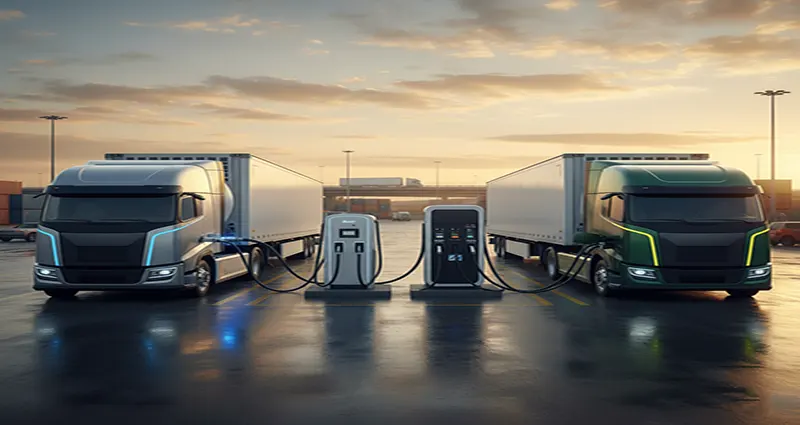
Hydrogen Fuel Cell vs Battery Electric Trucks for Long-Haul Logistics
As the transportation sector races toward net-zero emissions, the “Heavy Duty” segment remains the most difficult to decarbonize. For decades, diesel was the undisputed king of the highway. However, in 2026, a fierce technological rivalry has emerged. On one side, we have Battery Electric Trucks (BETs), which dominate regional routes; on the other, Hydrogen Fuel Cell Electric Vehicles (FCEVs), which are being hailed as the savior of long-haul logistics.
For fleet managers and supply chain executives, the choice isn’t just about “going green”—it’s about payload, uptime, and the total cost of ownership (TCO).
The Core Technology: How They Differ
Both vehicles are technically electric. They use electric motors to turn the wheels. The difference lies in how they store and generate that electricity.
- Battery Electric (BET): Operates like a giant smartphone. It stores energy in massive lithium-ion or LFP (Lithium Iron Phosphate) battery packs. To “refuel,” you must
